
On-Demand Delivery App Development Company
We design and build on-demand delivery platforms: a customer app, a partner or merchant app, a driver app and the dispatch back office that ties them together. Here is what such a build involves and how to scope it.
- Customer app
- Partner app
- Driver app
- Dispatch
- Live tracking
- Payments
Get a free consultation
Tell us about your app. We reply with next steps and a rough plan.
- No obligation
- NDA on request
- You own the code
What an on-demand delivery app really consists of
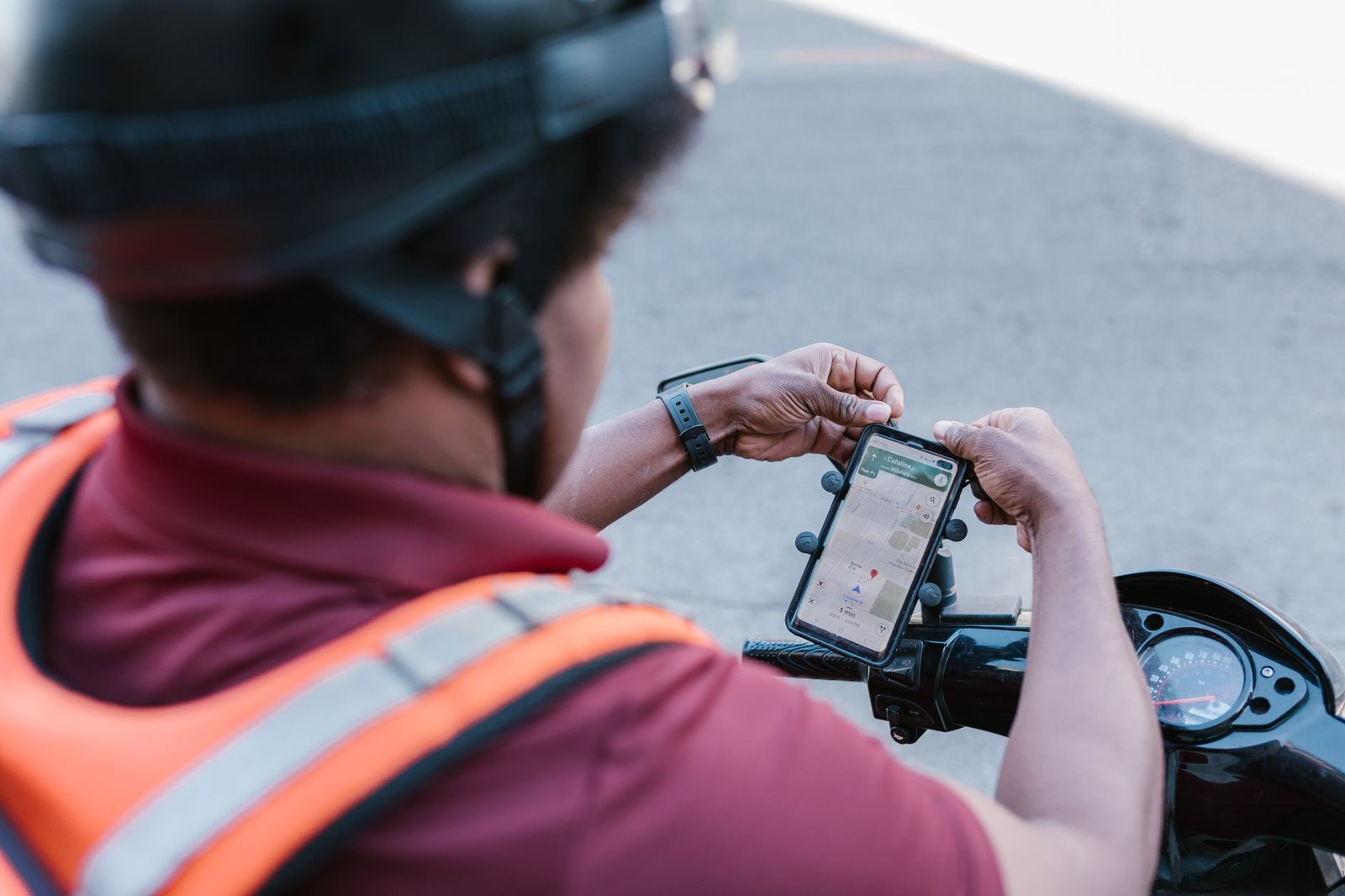
Short answer: an on-demand delivery product is not one app. It is at least three apps and a control room: a customer app to order and track, a partner app for the restaurant, store or warehouse that prepares the order, a driver app that accepts jobs and navigates, and an admin and dispatch dashboard that keeps the marketplace running. Behind them sit a real-time backend, a maps layer and a payments layer.
Businesses that typically need this include restaurants and cloud kitchens moving off aggregators, grocery and convenience retailers, pharmacies, florists, courier start-ups, and multi-vendor marketplaces that want to own the customer relationship and the data. Some run their own riders; others coordinate third-party couriers through a delivery API. Both models are workable, and the choice changes the architecture, so it is worth deciding early.
As an on-demand delivery app development company, we start by mapping the order lifecycle end to end: browse, order, pay, accept, prepare, assign, pick up, deliver, rate, settle. Every feature on this page exists to make one of those steps faster or less error-prone.
Customer app
Browse, order, pay, track the courier on a map, rate and reorder.
Partner app
Receive orders, accept or reject, update stock and prep time, view payouts.
Driver app
Go online, accept jobs, navigate, confirm pickup and drop-off, see earnings.
Admin and dispatch
Manage partners, zones, pricing, promotions, refunds and live operations.
Must-have features by app
A first release should do the core loop reliably before it does anything clever. The table below lists what we treat as the baseline for each surface.
| Surface | Baseline features | Why it matters |
|---|---|---|
| Customer | Sign-up with OTP or social login, address book, search and categories, cart, promo codes, multiple payment methods, order tracking, order history, support chat | Removes friction at every step of ordering |
| Partner | Order inbox with sound alerts, accept or reject, prep-time updates, menu and stock management, opening hours, payout statements | Late or missed acceptance is the top cause of failed orders |
| Driver | Verification and onboarding, online or offline toggle, job offers, in-app navigation hand-off, status buttons, photo confirmation, earnings | Drivers need a simple screen they can use one-handed |
| Admin | Live order board, manual assignment, zone and fee configuration, user and partner management, refunds, reports | Operations staff solve problems here every day |
Swipe sideways to see the full table on small screens.
Notifications deserve special attention. Order confirmed, rider assigned, rider nearby and delivered are the four messages customers actually read. Our guide to push notification strategy covers timing and permissions.
Advanced features that separate a platform from a prototype
Once the core loop works, the features below usually decide whether the business scales profitably. You do not need all of them on day one; choose the ones that fix your biggest operational pain.
| Capability | What it does | Complexity |
|---|---|---|
| Automatic dispatch | Assigns jobs by proximity, load, vehicle type and acceptance history, with fallback when nobody accepts | Medium to complex |
| Batching and multi-drop | Groups orders heading the same way to cut cost per delivery | Complex |
| Dynamic fees and surge | Adjusts delivery fee or driver pay by demand, weather or distance | Medium |
| Scheduled orders | Lets customers book a delivery slot ahead of time | Medium |
| Wallet and loyalty | Stored balance, cashback, referral credit and tiers | Medium |
| Multi-vendor cart rules | Separate prep and settlement per vendor inside one checkout | Complex |
| Analytics and heatmaps | Demand by zone and hour, delivery-time breakdowns, partner performance | Medium |
| Proof of delivery | Photo, signature or one-time code at hand-over | Simple to medium |
Swipe sideways to see the full table on small screens.
Architecture and integrations
Real-time behaviour is what makes these products different from an ordinary shopping app. Location updates, job offers and status changes must reach the right device within seconds, which usually means WebSockets or a managed real-time service alongside a conventional REST or GraphQL API. We prefer to design the API first so all four surfaces share the same contract; see API-first development.
- Maps and routing: geocoding, address autocomplete, distance and ETA, and turn-by-turn navigation through a maps provider. Provider choice affects both cost and coverage.
- Live location pipeline: the driver app sends position at intervals tuned to balance accuracy against battery; the backend stores a short trail and pushes updates to the customer.
- Dispatch engine: a service that scores candidate drivers, offers jobs with a timeout, and reassigns when ignored.
- Payments: a regional gateway for cards and wallets, cash-on-delivery handling, split payouts to partners and drivers, refunds and reconciliation. In India this typically includes UPI; in the UK and EU, card payments with strong customer authentication.
- Messaging: push, SMS and email for status updates and OTPs.
- Third parties: POS or inventory systems for partners, accounting exports, and courier aggregator APIs if you outsource some deliveries.
Cloud hosting should scale with lunch and dinner peaks rather than sit idle; our notes on cloud strategy and on-demand delivery app development go deeper on the stack.
Compliance, privacy and security for delivery apps
Delivery apps handle names, addresses, phone numbers, live location and payment data, so privacy is a design input, not an afterthought. Requirements depend on where you operate and should be confirmed with qualified counsel. In general terms:
- Personal data law: India’s Digital Personal Data Protection Act, 2023 and UK or EU GDPR set expectations around consent, purpose limitation, data minimisation, retention and user rights such as access and deletion.
- Location: collect driver location only while on shift, and customer location only when needed. Explain it in plain language at the permission prompt, and respect iOS and Android background-location rules.
- Payments: use a certified gateway so card details never touch your servers, keeping your exposure to card-data standards small.
- Food and pharmacy rules: licences, age-restricted items and cold-chain requirements vary by country and may need workflow checks in the partner app.
- Worker status: how drivers are classified and paid is a legal matter in many countries and can influence what the driver app records.
- Technical controls: encrypted transport, role-based access, audit logs, rate limiting, secure token storage and regular dependency updates. See mobile app security best practices.
This section is general guidance, not legal advice. Confirm licensing, tax and data-protection obligations for each market you plan to launch in.
Typical delivery timeline
General industry guidance: a focused single-city launch commonly takes a few months, while multi-vendor platforms with automatic dispatch and several payment methods take longer. We confirm a plan after discovery.
- Discovery and scopingMap the order lifecycle, user roles, zones and the operating model (own fleet or third-party couriers). Output: a prioritised scope and requirements document.
- UX and prototypeFlows and clickable screens for all four surfaces, tested with a few real drivers and partners.
- Core buildBackend, customer app, partner app, driver app and admin panel built in short iterations with working builds every sprint.
- Integrations and dispatchMaps, payments, notifications and the assignment logic, tested with simulated and real routes.
- Pilot and launchClosed pilot in one zone, fix what operations reveal, then store submission and phased rollout.
- Scale and supportMonitoring, analytics, new zones and feature releases after launch.
What drives the cost of a delivery app
We do not quote numbers on a web page because they depend on scope, but the drivers are predictable. Read our general guides on mobile app development cost and app maintenance cost for background.
| Tier | Typical scope | Cost-driving factors |
|---|---|---|
| Simple | One business, own riders, manual or simple assignment, one payment method | Number of screens, single city, minimal admin |
| Medium | Several partners, automatic dispatch, wallet and promos, iOS and Android | Dispatch rules, payment splits, admin depth |
| Complex | Multi-vendor marketplace, batching, surge, multiple cities and currencies | Real-time scale, ops tooling, compliance per market |
Swipe sideways to see the full table on small screens.
Other drivers include whether you build native or cross-platform (see native vs hybrid vs cross-platform), the maps provider’s usage fees, third-party integrations, and how much operations tooling you need. When comparing quotes, check that each includes the driver app and admin panel, not just the customer app. Sigmato provides an estimate after discovery.
Common mistakes we help you avoid
- Building only the customer app. Without partner, driver and admin tools the business cannot operate.
- Ignoring battery and network reality. Drivers work on mid-range phones in patchy coverage. Test location tracking on real routes, not a simulator.
- Launching in too many zones at once. Density beats coverage. One well-served area teaches more than five thin ones.
- Hard-coding fees and rules. Delivery fees, radii and commissions change often; make them admin settings.
- Skipping edge cases. Rejected orders, out-of-stock items, wrong addresses, failed payments and refunds consume most support time. Design them up front.
- No analytics from day one. You cannot improve delivery time you do not measure.
How Sigmato builds delivery platforms
Sigmato Solutions is a software and mobile app development company with teams in Bengaluru and the UK. For delivery products we build iOS and Android apps in Flutter or React Native where it fits, or native where device features demand it, on a cloud backend designed for real-time load.
- One shared API and design system across customer, partner and driver apps.
- Working builds at the end of every sprint so you can test with real operators early.
- QA on real devices and routes, covered in our mobile app testing guide.
- Documentation, source-code ownership and handover agreed in the contract.
- Post-launch maintenance and feature work, as described in our services.
Related reading: fleet management software, logistics and fleet tracking apps and ecommerce app development. To discuss your idea, use the form on this page or visit our contact page.
Frequently asked questions
How much does it cost to build an on-demand delivery app?
It depends on the number of apps, the dispatch logic, payment methods and cities. A single-business app with own riders sits at the simple end; a multi-vendor marketplace with automatic dispatch sits at the complex end. We give an estimate after a discovery session once scope is clear.
Do I need a separate driver app?
Yes, in almost every case. Drivers need job offers, navigation hand-off, status updates and earnings in a screen designed for use on the move. Some teams start with a driver mode inside one app, but a separate app is easier to secure and maintain.
Can you integrate with third-party couriers instead of my own fleet?
Yes. Courier aggregator and logistics APIs can be integrated so orders are dispatched externally and tracked in your admin panel. Many businesses use a hybrid model with their own riders plus third-party overflow.
How does live tracking work?
The driver app sends location updates to the backend at tuned intervals, and the customer app receives them over a real-time connection and draws the courier on a map. Intervals balance accuracy against battery use and data costs.
Which payment methods can be supported?
Cards, wallets, bank transfers, cash on delivery and, in India, UPI, depending on the gateway you choose. We also build split payouts to partners and drivers, refunds and reconciliation reports.
How long does it take to launch?
As general guidance, a focused single-city launch commonly takes a few months, and larger marketplaces take longer. A phased plan with a pilot zone lets you start earning feedback early. We confirm timelines after discovery.
Do you handle data protection requirements?
We build with consent, minimisation, encryption and deletion workflows in mind, aligned to principles in India’s DPDP Act 2023 and UK or EU GDPR where relevant. You should confirm exact legal obligations for your markets with qualified counsel.
Planning a delivery platform?
Tell us your order flow and markets, and we will suggest a phased scope and an estimate after discovery.