
Logistics and Fleet Tracking App Development
Fleet and logistics software turns vehicles, drivers and parcels into data you can act on. We build tracking, routing and driver apps that work on real roads with patchy signal.
- GPS tracking
- Route optimisation
- Driver app
- Proof of delivery
- Telematics
Get a free consultation
Tell us about your app. We reply with next steps and a rough plan.
- No obligation
- NDA on request
- You own the code
What logistics and fleet tracking software covers
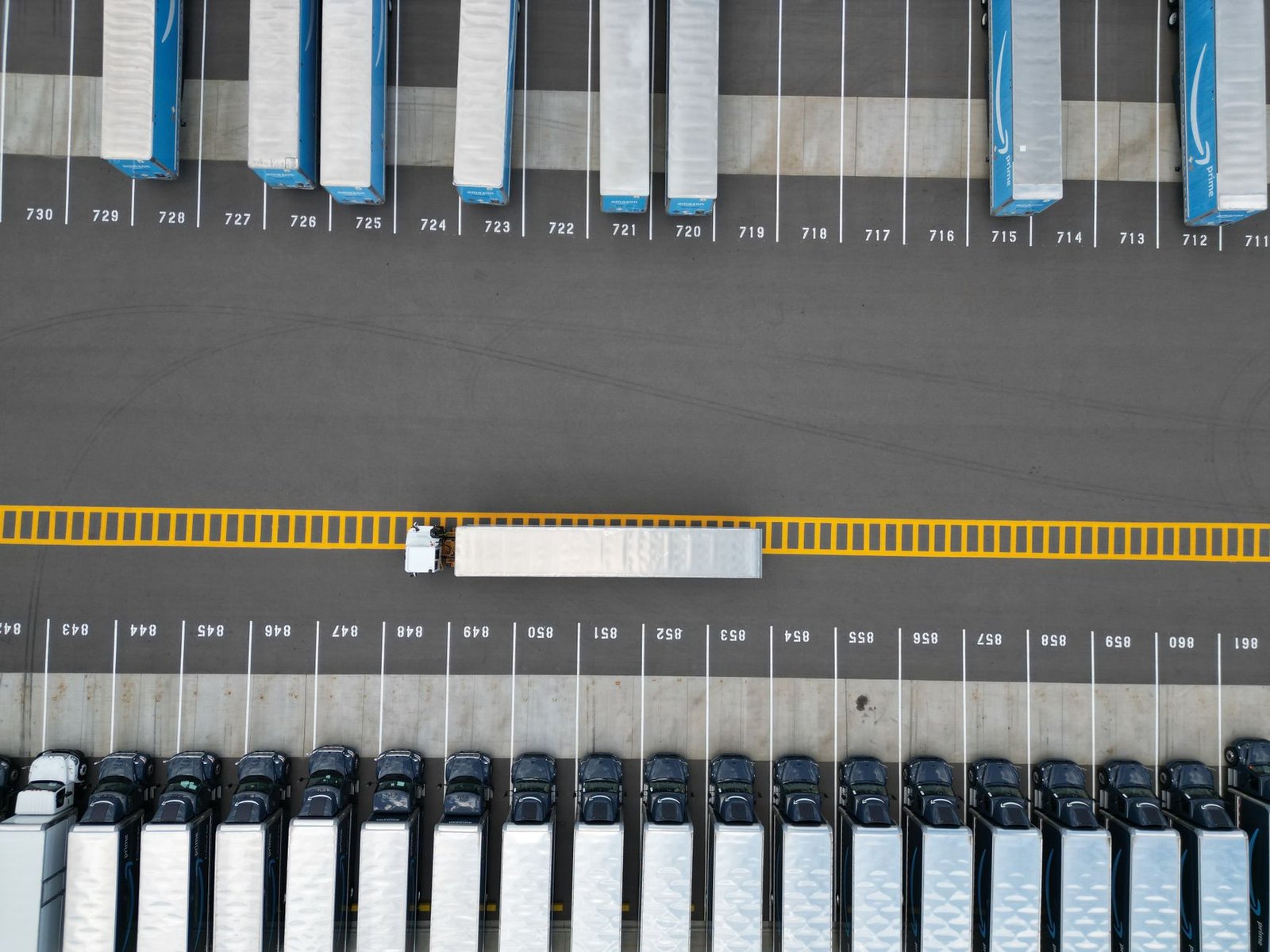
Short answer: a fleet tracking system shows where vehicles are, plans where they should go, gives drivers the information to do their jobs, and proves what was delivered. It usually has a web control room for dispatchers, a driver app, and optional customer tracking links.
It suits transport and courier companies, distributors, field-service teams, construction and equipment fleets, school and staff transport operators, cold-chain businesses and retailers running their own vehicles. If you move people or goods and care about time, fuel, safety or customer updates, tracking and routing software pays attention to the right things.
Use cases differ. A parcel carrier needs stops, scans and proof of delivery. A service fleet needs jobs, time windows and checklists. A haulage firm needs trip logs, compliance records and maintenance. Defining which category you are in shapes the whole product; our overview of fleet management software gives more context.
Live tracking
Vehicle position, status, speed and history on a map.
Route planning
Sequence stops and assign vehicles within time and capacity limits.
Driver app
Jobs, navigation, status updates, scanning and proof of delivery.
Analytics
Fuel, idling, on-time rate, utilisation and driver behaviour.
Core and advanced features
| Level | Feature | What it does |
|---|---|---|
| Core | Real-time map with vehicle status | Moving, idle, stopped or offline at a glance |
| Core | Trip history and replay | Review routes, stops and durations |
| Core | Job and stop management | Create, assign, reorder and track tasks |
| Core | Driver app with status updates | Accept job, arrived, completed, failed with reason |
| Core | Proof of delivery | Photo, signature, barcode or one-time code |
| Core | Geofences and alerts | Entry, exit, late and unscheduled stop notifications |
| Advanced | Route optimisation | Multi-stop sequencing with windows, capacity and traffic |
| Advanced | Telematics and sensors | Engine data, fuel, temperature and door sensors |
| Advanced | Driver behaviour scoring | Harsh braking, speeding and idling reports |
| Advanced | Customer tracking links and ETAs | Reduce where-is-my-order calls |
| Advanced | Maintenance scheduling | Service reminders by distance or hours |
| Advanced | Electronic logs and compliance reports | Driver hours and inspection records |
Swipe sideways to see the full table on small screens.
GPS tracking: phones, trackers and telematics
Location can come from three sources, and many fleets use a mix.
- Driver smartphone: cheapest to start, no hardware to install, and works with the driver app. Accuracy and battery use depend on the phone and on tuned update intervals; drivers can switch it off, so policy matters.
- Dedicated GPS trackers: hard-wired or plug-in devices that report continuously, often with ignition status, and survive phone failures. They need device management and SIM or data plans.
- OEM telematics and CAN bus: richer vehicle data such as fuel, engine diagnostics and odometer, accessed through manufacturer or aggregator APIs.
The backend ingests streams from all of them, normalises the data and stores it as time-series records. It needs to handle bursts, out-of-order messages and duplicate points. Maps are usually drawn with a mapping SDK, with clustering and trails so a large fleet stays readable.
Drivers frequently lose signal, so the app must queue updates and sync when back online, an approach explained in offline-first mobile apps.
Route optimisation and dispatch
Route planning is a constrained optimisation problem: many stops, time windows, vehicle capacity, driver shifts, traffic and priority jobs. Off-the-shelf routing APIs handle many cases; very large or unusual problems may need a tuned solver. Either way the dispatcher should be able to override the plan, because real days rarely follow the model.
- Import or create jobs with addresses, windows and load details.
- Geocode and validate addresses, flagging doubtful ones for review.
- Run optimisation to propose routes and vehicle assignments.
- Publish routes to driver apps and notify customers.
- Re-plan during the day when jobs are added, cancelled or delayed.
For consumer-facing speed-sensitive delivery, see on-demand delivery app development.
Architecture, integrations and security
- Driver app: built on Flutter or React Native for both platforms, or native where background-location and barcode scanning need it. Compare in native vs cross-platform.
- Backend: API plus event streaming for location ingestion, a time-series store, job management and alert rules.
- Web control room: dispatch board, map, reports and user management.
- Integrations: ERP, warehouse and order systems, carrier APIs, accounting, and fuel cards. See API integration development.
- Notifications: SMS, email and push to customers and staff.
Privacy and compliance
Tracking drivers is processing personal data. India’s DPDP Act, 2023 and UK or EU GDPR expect a clear purpose, transparency, proportionality and limited retention. Employment and works-council rules in some countries restrict monitoring outside working hours, so allow location to be limited to shifts. Vehicle data, hours-of-service and dangerous-goods rules differ by country and should be confirmed with qualified advisers.
Technical security includes encrypted transport, scoped API keys for devices, role-based access in the control room, audit logs and secure storage on the phone. See mobile app security best practices.
Project timeline
General industry guidance: a tracking and driver-app MVP commonly takes a few months, while optimisation, telematics and ERP integration extend the schedule.
- Operations discoveryRide along or interview dispatchers and drivers. List jobs, exceptions and reports that matter.
- Hardware and data planDecide phone, tracker or OEM data, and plan device onboarding and data volumes.
- Design and prototypeDispatcher board and driver flows tested for glare, gloves and one-handed use.
- Build coreTracking, jobs, driver app, proof of delivery and alerts.
- Optimisation and integrationsRouting, ERP and customer notifications.
- Field pilotRun with a few vehicles on real routes, tune battery use and alert noise, then roll out.
Cost drivers for fleet and logistics apps
| Tier | Typical scope | Main drivers |
|---|---|---|
| Simple | Phone-based tracking, jobs, status and proof of delivery for a small fleet | Number of screens, map usage |
| Medium | Dispatch board, geofences, route planning, customer links, iOS and Android | Routing complexity, notifications |
| Complex | Telematics and sensors, optimisation, ERP integration, multi-depot, compliance reports | Device management, data volume, integrations |
Swipe sideways to see the full table on small screens.
Recurring costs include map and routing API usage, SMS, tracker data plans and hosting. Compare quotes using our guide on fixed-price vs time and material, and see mobile app development cost. Sigmato gives an estimate after discovery.
Common mistakes
- Relying on a simulator. Test tracking on real vehicles, tunnels and low-end phones.
- Aggressive location polling. It drains batteries and drivers will turn it off.
- No exception workflow. Failed deliveries, access problems and breakdowns are normal days.
- Alert overload. Too many alerts get ignored. Start with a few useful ones.
- Ignoring driver consent and policy. Explain what is tracked and when.
- Bad address data. Garbage in, bad routes out; validate at entry.
How Sigmato builds logistics products
Sigmato Solutions, with teams in Bengaluru and the UK, builds mobile apps, web dashboards and cloud backends. For logistics clients we start by observing real operations, then deliver driver app and control room together so both sides can test the loop in a pilot.
Our delivery approach includes documented APIs, CI/CD pipelines and monitoring for stable releases, plus maintenance after launch. For wider custom needs read custom software development, browse our services, or contact us.
Frequently asked questions
Can the driver’s phone replace a GPS tracker?
For many fleets, yes. Phone-based tracking is cheaper and fast to roll out, but depends on battery, permissions and driver behaviour. Dedicated trackers are more robust and add ignition and vehicle data. Many operators use both.
What is route optimisation and do I need it?
It sequences stops and assigns vehicles to minimise time or distance within constraints like time windows and capacity. If you run many daily stops, it usually helps; for a few fixed routes, basic planning may be enough.
How does proof of delivery work?
The driver app captures evidence at hand-over, such as a photo, signature, barcode scan or one-time code, with timestamp and location. It syncs to the control room and can be shared with the customer.
Can you integrate with telematics hardware?
Yes, via device protocols or provider APIs, depending on the hardware. We confirm what data the devices expose during discovery, then normalise it in the backend.
Does the app work without signal?
The driver app can queue location points, status changes and proofs, and sync when connectivity returns. This is essential for rural routes, basements and tunnels.
Are there privacy rules for tracking drivers?
Yes. Laws like India’s DPDP Act and UK or EU GDPR expect transparency and proportionality, and employment rules may limit monitoring outside working hours. Confirm specifics for your country with qualified advisers.
How long does a fleet tracking project take?
As a general guide, a tracking and driver-app MVP commonly takes a few months, with optimisation and ERP integration adding time. We give a plan after discovery.
Want to see and plan your fleet in real time?
Tell us about your vehicles, routes and systems, and we will propose a phased scope and estimate.