
Building a Food Delivery Solution
We design and build a complete food delivery solution, from the customer’s first tap to the rider’s doorstep handover, on a platform you own.
- Customer, restaurant and rider apps plus a web admin panel
- Live order tracking, dispatch logic and push notifications
- Payment gateways, wallets, coupons and commission settlement
- Single-restaurant, chain or multi-vendor marketplace models
Discuss Your Delivery Platform
A food delivery solution is really four products that must behave as one: an ordering app for customers, an order console for restaurants, a job app for riders and an operations dashboard for your team. If any one of them is slow or confusing, food goes cold and customers leave. Sigmato plans these pieces together so that menus, orders, payments and locations stay in sync from the moment an order is placed.
We work with restaurant groups that want to stop paying aggregator commission on every order, cloud kitchens that need tight kitchen-to-rider timing, and founders launching a local delivery marketplace. This page explains how we approach the build, what goes into each component and the decisions you will need to make early.
What a Food Delivery Solution Includes
Most platforms need the six components below. For a single restaurant some can be merged; for a marketplace each one grows in depth.
Customer ordering app
Menu browsing, search, customisation, cart, scheduled orders, reorders and ratings, built natively or with Flutter for both platforms.
Restaurant console
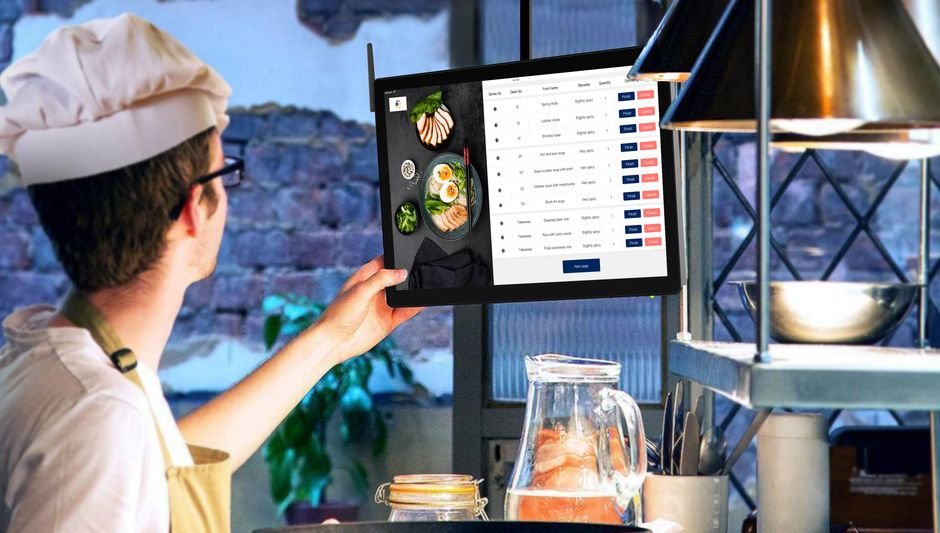
Accept or reject orders, set preparation times, pause items that run out and manage opening hours from a tablet or browser.
Rider app
Job offers, turn-by-turn navigation hand-off, pickup and drop-off confirmation, proof of delivery and earnings history.
Live tracking and dispatch
Real-time rider location, ETAs and assignment rules based on distance, load and kitchen readiness.
Payments and payouts
Cards, wallets and cash on delivery, with commission calculation, refunds and scheduled payouts to restaurants and riders.
Admin and analytics
Zones, delivery fees, promotions, support tickets and reports on order volume, delivery times and cancellations.
How We Build a Food Delivery Platform
We build in stages so you can launch in one area, learn from real orders and expand. A focused first release for a single city or restaurant group typically takes three to five months.
- Business model and scope. We confirm whether you are a single brand, a chain or a marketplace, how riders are employed or contracted, and which features belong in the first release.
- Order flow design. We map every state an order passes through, including the awkward ones: rejected orders, late riders, missing items and refunds.
- UX and prototypes. Clickable prototypes of the three apps so restaurant staff and riders can try them before development, following our mobile app design process.
- Backend and real-time layer. APIs, order engine and location streaming, usually on Node.js with WebSockets and a managed cloud database.
- Testing in the field. Load tests for peak lunch and dinner hours, plus pilot runs with real riders on real roads.
- Store release and support. Submission to the App Store and Google Play, monitoring, and a support plan for the busy weeks after launch.
Choosing the Right Delivery Model
Your business model shapes the feature list, the cost and the time to launch more than any technology choice does.
| Model | Best for | Key extra features |
|---|---|---|
| Single restaurant or brand | Restaurants moving loyal customers off aggregators | Loyalty points, direct ordering website, own or third-party riders |
| Chain or cloud kitchen | Several outlets or virtual brands from one kitchen | Outlet routing by location, central menu control, kitchen display |
| Multi-vendor marketplace | Founders building a local delivery business | Vendor onboarding, commission rules, rider fleet management, payouts |
| Grocery or mixed delivery | Expanding beyond cooked food | Large catalogues, substitutions, delivery slots |
For a deeper look at features and budgets, read our guides to on-demand delivery app development and mobile app development cost, or see our food delivery app development service.
Why Choose Sigmato for Your Food Delivery Solution
- The whole system, one team. Customer, restaurant and rider apps are designed and built together, so order states and notifications match everywhere.
- Real-time experience. We have built live location and messaging features and understand the battery, connectivity and accuracy trade-offs on riders’ phones.
- Secure payments. We integrate certified gateways rather than handling card data ourselves, keeping you aligned with PCI DSS requirements.
- Store-ready builds. Apps follow Apple’s App Store Review Guidelines and Google’s Android developer guidance, reducing rejection risk at launch.
- You own the platform. Source code, data and store accounts are yours, with no per-order licence fee.
Who It’s For
Restaurant groups and franchises, cloud kitchens, catering companies, grocery and pharmacy stores adding delivery, and entrepreneurs launching a regional delivery marketplace.
Food Delivery App Development in Bengaluru and Worldwide
Our engineering centre is in Jayanagar, Bengaluru, and we have a UK branch in Fleet, Hampshire. Clients in and around Bengaluru can meet the team in person to walk through the order flow; clients in the UK, US, Middle East and elsewhere work with us remotely through shared boards, demos and regular calls. Learn more about our software development company in Bangalore or view all the locations we serve.
Frequently Asked Questions
How long does it take to build a food delivery solution?
A first release covering the customer app, restaurant console, rider app and admin panel usually takes three to five months. A single-restaurant ordering app can be faster; a full marketplace with complex payouts takes longer.
Should I build my own platform or stay on aggregators?
Many restaurants do both: aggregators bring new customers, while a direct app gives repeat customers a cheaper channel and gives you their data. We can help you work out whether your order volume justifies the investment.
Can I use third-party delivery riders instead of my own fleet?
Yes. Where a local logistics provider offers an API, we can dispatch orders to it, track the rider and show updates in your customer app, alongside or instead of your own riders.
Which technologies do you use?
Typically Flutter or native Swift and Kotlin for the apps, Node.js for the backend and real-time services, React for the admin panel and a mapping provider such as Google Maps Platform for geocoding and routes. We adapt this to your team and budget.
Do you provide support after launch?
Yes. We offer maintenance plans covering monitoring, bug fixes, operating system updates and new features as your delivery business grows.
Plan Your Food Delivery Platform
Share your business model and launch area, and we’ll suggest a first-release scope, a recommended stack and a clear estimate.