
Telemedicine App Development Company
Telemedicine products combine video, scheduling, records and prescribing in a setting where privacy and reliability matter more than novelty. This page explains what to build, how integrations work and what to check with your regulators.
- Video consults
- E-prescriptions
- EHR integration
- Health data privacy
- Scheduling
Get a free consultation
Tell us about your app. We reply with next steps and a rough plan.
- No obligation
- NDA on request
- You own the code
What a telemedicine app includes
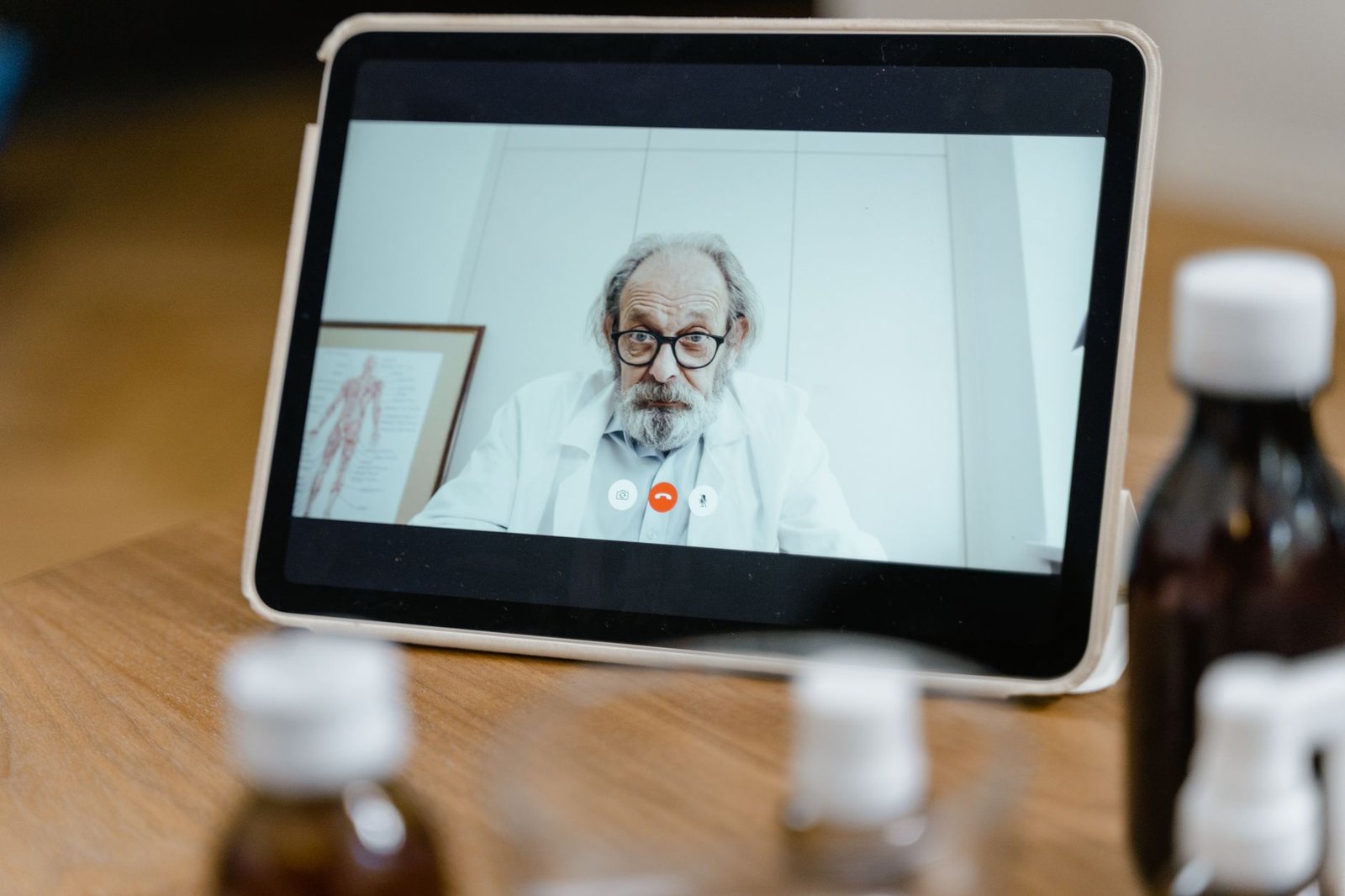
Short answer: a telemedicine app lets a patient book a consultation, meet a clinician by video or chat, share records, receive a prescription and pay, while the clinic manages schedules, notes and follow-ups. It is a regulated healthcare workflow delivered through a mobile and web interface.
Typical clients are clinics and hospital groups extending care online, specialist practices, mental-health and wellness providers, diagnostic labs, pharmacies and digital health start-ups. Some products serve one clinic; others connect many doctors to many patients as a marketplace.
Because healthcare rules differ widely, the first task for any telemedicine app development company is to establish which country, which professions and which kinds of consultation are in scope. Whether a clinician may prescribe remotely, what must be recorded and where data may be stored all depend on local law.
Patient app
Sign-up, booking, video visit, records, prescriptions, payments and reminders.
Clinician app
Schedule, waiting room, notes, prescribing, follow-up and earnings.
Admin portal
Doctor onboarding, verification, pricing, reports and audit logs.
Must-have and advanced features
| Level | Feature | Notes |
|---|---|---|
| Must-have | Patient profile and consent capture | Identity, contact, medical history, privacy consent |
| Must-have | Doctor discovery and appointment booking | Filter by speciality, language, availability |
| Must-have | Secure video consultation | Adaptive quality, waiting room, reconnect handling |
| Must-have | Chat and file sharing | Share reports and images securely |
| Must-have | E-prescriptions | Template, signature and delivery to patient or pharmacy where permitted |
| Must-have | Payments and invoices | Per-consult, packages or insurance flows |
| Advanced | EHR and lab integration | Read and write records through standards |
| Advanced | Remote monitoring | Device and wearable data for chronic care |
| Advanced | AI-assisted notes or triage | Human review required; see AI app cost |
| Advanced | Multilingual support and interpreters | Wider access and inclusion |
| Advanced | Care plans and follow-up tasks | Adherence reminders and outcomes tracking |
| Advanced | Pharmacy and delivery integration | Order fulfilment after prescribing |
Swipe sideways to see the full table on small screens.
Our broader overview on telemedicine app development compares these features with typical launch priorities.
Video consultations: what makes them reliable
Video is the heart of the product, and patients are often on mobile data in a hurry. A reliable consultation experience depends on several choices.
- Real-time infrastructure: WebRTC through a managed provider or self-hosted media servers. Managed services speed up delivery and handle scaling; self-hosting offers control over data location.
- Adaptive quality: the call should degrade to audio or low-resolution video rather than drop.
- Pre-call checks: camera, microphone and network test before the visit starts.
- Waiting room and join links: patients should join from the app without extra downloads where possible.
- Recording policy: record only where law and consent allow, and store securely.
- Fallbacks: phone call or chat when video fails, with the clinician able to switch quickly.
For general real-time media patterns, see video streaming app development.
Architecture and EHR integration
A standalone app can work for a single clinic, but most serious deployments need to exchange data with existing systems. Interoperability standards such as HL7 FHIR are widely used for this, and many EHR vendors expose FHIR or proprietary APIs. In India, national digital health initiatives define their own interfaces; in the UK and EU, integrations vary by provider and region. Availability depends on the vendor and your agreement with them.
- EHR or practice management: patient demographics, appointments, encounters, medication lists.
- Labs and imaging: orders and results.
- Pharmacy: prescription transmission and fulfilment status.
- Payments and insurance: gateways, claims or eligibility checks where applicable.
- Identity: national or institutional ID, plus strong authentication for clinicians.
- Notifications: appointment, medication and follow-up reminders with privacy-safe wording on lock screens.
We usually build an API layer with strict access control between apps and systems of record, in the spirit of API-first development, and host in a region that satisfies your data residency needs.
Health data privacy and compliance
Health information is among the most sensitive data a product can hold. Requirements depend on the country where patients and clinicians are located, and on the type of service. We design around shared principles and then check specifics with your legal and clinical advisers.
- Privacy law: India’s Digital Personal Data Protection Act, 2023, and UK or EU GDPR (which treats health data as special category data) set principles such as lawful basis, explicit consent, minimisation, purpose limitation, retention, breach notification and individual rights. In the United States, HIPAA-style rules for protected health information apply to covered entities; other countries have their own regimes.
- Clinical regulation: rules on remote prescribing, clinician licensing across borders, consultation records and emergency handling vary by country.
- Medical device rules: software that diagnoses or recommends treatment can be classed as a medical device in some jurisdictions.
- Security controls: encryption in transit and at rest, role-based access, audit trails, strong authentication, secure key management, session timeouts and regular testing. See mobile app security best practices.
- Data location and vendors: know where data is stored and sign appropriate agreements with cloud and video providers.
- Minimise on-device data: avoid storing records in logs, screenshots or notifications.
This is general information, not legal or medical advice. Requirements depend on the country and service, so confirm them with qualified legal and clinical advisers before launch.
Delivery phases
General industry guidance: a focused first release commonly takes a few months; EHR integration and approvals can extend the schedule because they depend on third parties.
- Regulatory and clinical discoveryDefine countries, consultation types, prescribing rules and data location. Involve clinicians early.
- DesignFlows for patients and doctors, accessibility checks and a clickable prototype tested with real clinicians.
- Core buildAccounts, booking, video, chat, prescriptions, payments and admin on a secure backend.
- IntegrationsEHR, labs, pharmacy and identity connections, tested with vendor sandboxes.
- Security review and pilotPenetration testing, privacy review and a small supervised pilot.
- Launch and monitorStaged release, uptime and call-quality monitoring, support process.
What drives telemedicine app cost
| Tier | Typical scope | Cost drivers |
|---|---|---|
| Simple | One clinic, video and chat, booking, payments | Video provider fees, design |
| Medium | Multiple doctors, e-prescriptions, records, iOS and Android | Prescribing rules, notifications, admin |
| Complex | Marketplace, EHR and lab integration, monitoring, multi-country | Compliance work, integrations, hosting regions, audits |
Swipe sideways to see the full table on small screens.
Ongoing costs include video minutes, SMS, hosting, security testing and maintenance. For background see mobile app development cost. Sigmato provides an estimate after discovery.
Common mistakes in telemedicine projects
- Starting with technology instead of regulation. Rules on remote prescribing can reshape the product.
- Underestimating integration time. Vendor approvals and sandboxes take calendar time.
- Weak consent flows. Consent should be explicit, recorded and revocable.
- Revealing detail in notifications. Keep lock-screen text generic.
- No offline or low-bandwidth plan. Patients in poor coverage still need to be seen.
- Ignoring clinician workflow. If notes and prescribing are slow, doctors will not use it.
How Sigmato builds telemedicine products
Sigmato Solutions has teams in Bengaluru and the UK and builds mobile apps, web portals and secure backends. For healthcare clients we work with your clinical and legal advisers, build privacy and security into the architecture, and test on real devices and networks. We do not give legal or medical advice, but we make it straightforward to implement the controls your advisers specify.
Related pages: appointment booking apps, UI/UX design and app development, services and contact.
Frequently asked questions
What features does a telemedicine app need at launch?
Patient and doctor profiles, booking, secure video and chat, e-prescriptions where permitted, payments and an admin panel are the usual baseline. EHR integration, monitoring and AI features can follow once the core is stable.
Can you integrate with our EHR or hospital system?
Often yes, subject to what the vendor’s APIs allow. Many systems support FHIR or proprietary APIs. We confirm access, sandboxes and approval steps during discovery because they affect the timeline.
How do you protect patient data?
We encrypt data in transit and at rest, apply role-based access, log access, use strong authentication, minimise on-device storage and test security. The specific legal regime depends on the country and should be confirmed with qualified counsel.
Do DPDP, GDPR and HIPAA apply to my app?
It depends on where your patients and clinicians are and what your organisation is. India’s DPDP Act, UK or EU GDPR and HIPAA-style rules in the United States each cover different situations. We design around common principles and your advisers confirm the exact duties.
Can doctors prescribe remotely through the app?
Whether and how they may prescribe remotely depends on national and professional rules. We can build the e-prescription workflow your regulations allow, including templates, signatures and pharmacy transmission.
What video technology do you use?
Usually WebRTC through a managed provider for speed and scale, or self-hosted media servers where control over data location matters. We choose with you based on privacy, cost and quality needs.
How long does it take to build?
As a general guide, a focused first version commonly takes a few months, with integrations and approvals adding time. We give a plan after discovery.
Building a telehealth product?
Tell us your country, specialities and systems, and we will outline a compliant-by-design scope and estimate.